
Know what things actually cost, what actually matters, and who actually delivers—before you hire anyone.
Need help with HVAC in Miami?
Get matched with a trusted local contractor and avoid costly guesswork.
What We Do Different
We don’t just list contractors.
We break down what things actually cost, what matters in the job, and which contractors are worth your time—so you can make the right decision the first time.
How It Works
Tell us about your project

We guide you and match you

You move forward with clarity
Ready To Get Started?

5k+Happy Clients

20k+Bookings

500+Experts
We Are Here To Help
Count on clear, practical guidance and fast resolution from experienced professionals—no jargon, no delays. Reach out and we’ll provide the straightforward support and next steps you need to move forward.
Roofing

Impact Windows & Doors
HVAC - Air Conditioning
Plumbing & Electrical
Roof Replacement Cost Miami 2026: What It Really Costs—and Why
Replacing a roof in Miami isn’t just another home project—it’s one of the most important (and expensive) decisions you’ll make as a homeowner. Between rising material costs, stricter building codes, and insurance pressures, the numbers you might find online often don’t reflect what’s actually happening locally.
This guide breaks it down the way it should be: clear, realistic, and specific to Miami in 2026—so you can understand not just the cost, but why it costs what it does.
What Is the Average Roof Replacement Cost in Miami?
Most homeowners want a quick number—but that’s where people get misled.
In Miami today, roof replacement typically falls somewhere between $10,000 and $70,000+. That’s a wide range, and there’s a reason for it. The cost isn’t just based on size—it’s driven by material choice, structural complexity, and how strictly the job follows local code.
A small, simple home with asphalt shingles might land on the lower end. A larger property with tile or metal roofing—especially in areas like Coral Gables or Pinecrest—can easily reach the higher end or beyond.
The key takeaway: if you’re only asking “how much does it cost,” you’re missing the real question—what kind of roof are you actually building?
Cost Per Square Foot: The Metric That Actually Matters
Instead of focusing on total price, professionals look at cost per square foot—because it allows you to compare estimates more accurately.
In Miami:
Lower-end projects may come in around $5–$7 per square foot
Most standard projects fall between $8–$12 per square foot
Higher-end systems can reach $15–$20+ per square foot
If a quote comes in far below this range, it’s not a deal—it usually means something is missing. That could be lower-quality materials, skipped steps, or shortcuts that won’t show up until after the job is done.
Roof Replacement Cost by Material (And What That Means for You)


6
Asphalt Shingles: The Budget Option
Asphalt shingles are the most affordable way to replace a roof, which is why they’re common on smaller homes or rental properties.
They typically cost between $8,000 and $18,000 depending on size. While the upfront cost is attractive, they don’t always hold up as well in Miami’s heat, humidity, and storm conditions. That means you may be replacing them sooner than other materials.
Tile Roofs: The Miami Standard
Concrete and clay tile roofs are everywhere in South Florida for a reason—they’re durable, weather-resistant, and fit the architectural style.
Expect costs between $18,000 and $45,000+. The upfront investment is higher, but the longer lifespan often makes it more cost-effective over time. This is where many homeowners land when they’re thinking long-term.
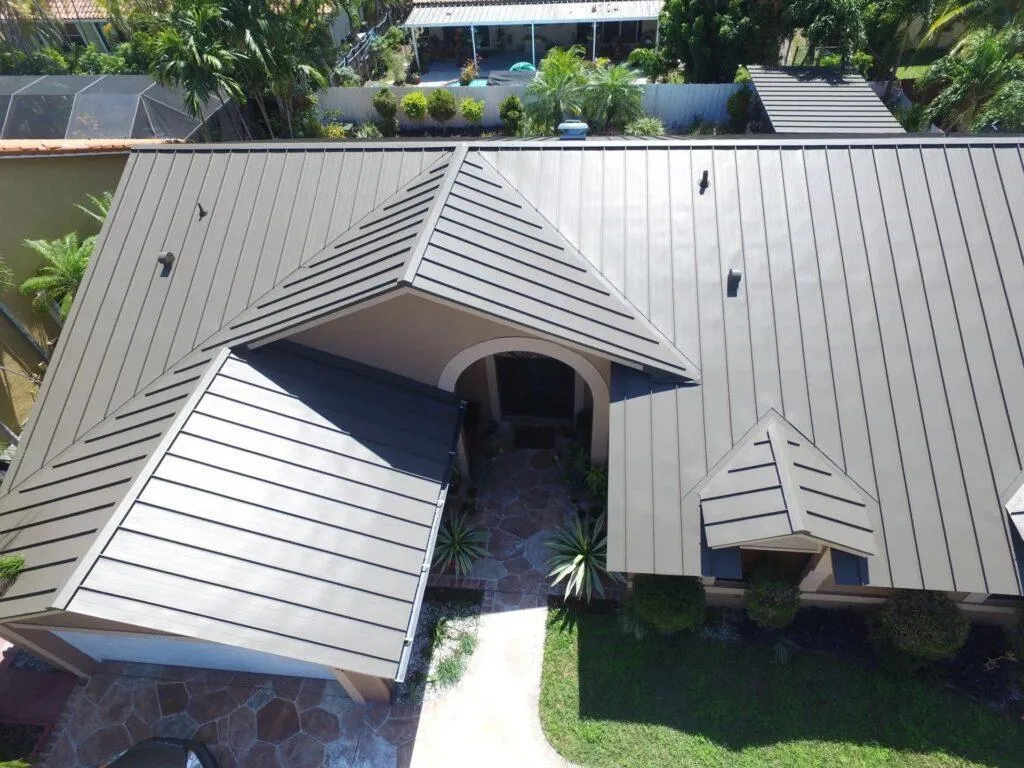
Metal Roofing: The Premium Choice
Metal roofs have gained traction in Miami thanks to their durability and hurricane resistance.
They usually range from $20,000 to $50,000+. While the price is higher, they offer strong long-term value, especially if you plan to stay in your home for years and want to minimize future replacements.
Flat or Low-Slope Roofs
Flat roofs are common in modern homes and additions. Materials like TPO or modified bitumen are typically used.
Costs usually fall between $12,000 and $30,000, but performance depends heavily on installation quality and ongoing maintenance.
What Actually Drives Roof Replacement Costs in Miami
Understanding this section is what separates a smart decision from an expensive mistake.
Roof Complexity


Two homes with the same square footage can have completely different costs.
A simple roof with few angles is faster and easier to install. But once you add multiple slopes, valleys, skylights, or penetrations, labor increases—and so does the risk of leaks if done incorrectly.
Complexity is one of the biggest hidden cost drivers.
Miami Building Codes and Hurricane Requirements
Miami has some of the strictest building codes in the country—and for good reason.
Modern roof replacements often require:
Secondary water barriers
Stronger fastening systems
Detailed inspections throughout the process
These requirements can add several thousand dollars to a project, but skipping them isn’t an option if you want your roof to pass inspection and hold up during storms.
Tear-Off vs. Overlay
Some homeowners try to save money by installing a new roof over the old one (overlay). While this reduces upfront cost, it often leads to bigger problems later—especially in Miami’s climate.
A full tear-off costs more, but it allows the contractor to inspect and fix underlying issues. In most cases, it’s the smarter long-term decision.
Labor and Crew Quality
This is where things get uncomfortable but important.
Experienced, licensed crews are in high demand—and their pricing reflects that. Lower-cost crews may cut corners, rush installations, or lack proper insurance.
The difference doesn’t show up immediately—it shows up months later when issues start appearing.
Hidden Costs Most Homeowners Don’t Expect
Even with a quote in hand, there are variables that can increase the final price:
Wood replacement if damage is found
Permit and inspection fees
Disposal of old materials
Upgrades required to meet current code
This is why two estimates can differ significantly—and why understanding what’s included matters more than the number itself.
How Your Roof Affects Insurance in Florida
In Miami, your roof plays a direct role in your insurance costs.
Older roofs can lead to:
Higher premiums
Limited coverage options
Difficulty renewing policies
A new roof, on the other hand, may help you qualify for better rates or discounts. So part of your investment comes back through reduced long-term costs.
How Long Does a Roof Replacement Take?
A roof replacement isn’t just installation—it’s a process.
Permitting can take 2–6 weeks
Installation usually takes a few days to about a week
Inspections add additional time depending on scheduling
If a contractor promises immediate work without permits, that’s a shortcut you don’t want.
How to Make a Smart Roofing Decision
At this point, the goal isn’t just to get a roof—it’s to make the right call.
Start by getting multiple estimates and comparing them carefully. Look beyond the total price and focus on:
What’s included in the scope
The quality of materials
Warranty coverage
The contractor’s track record locally
This is one of those decisions where doing a little more work upfront saves you significantly later.
Final Thoughts: What to Expect in 2026
Roof replacement in Miami is not a place to cut corners.
Prices are higher than they used to be, but the bigger risk isn’t overpaying—it’s choosing the wrong contractor or the wrong system.
If you approach it with the right information and a clear understanding of what drives cost, you’ll make a decision that holds up—not just for the next year, but for the next decade.

What Our Customer Are Saying

The roofing company I ended up going with was a really good fit. They were easy to work with, showed up when they said they would, and didn’t make the process more complicated than it needed to be. Overall, it just worked out better than I expected.
Andy R.
I had already talked to a couple of window contractors and felt like I was just getting sold to. This was different. It helped me understand what actually mattered, what questions to ask, and what was worth paying for. I ended up going with a better option than I probably would have on my own.
Laura G.
I was worried about picking the wrong AC company, but the one I went with turned out to be a great choice. They were professional, clear about pricing, and the whole job was handled without any surprises. Everything’s been running perfectly since.”
Albert F.
Don’t guess.
Make the right decision.

We help Miami homeowners avoid costly mistakes by giving them real-world guidance on home repairs, upgrades, and contractor decisions.
Explore Site
Newsletter
Subscribe To Our Newsletter
© Copyright 2026. Miami Homeowner Insider. All Right are Reserved.